
Parking Garage Inspection in NYC for Local Law 126
We arrange your Local Law 126 condition assessment with a licensed Qualified Parking Structure Inspector, prepare the garage and its records, and make sure the report reaches DOB on time. When the report lists repairs, the same team carries them out.

What Happens During a Local Law 126 Garage Inspection?
A Local Law 126 inspection is a condition assessment of every part of the parking structure, carried out by a QPSI. The inspector walks each level, physically examines at least 10% of every structural element, such as slabs, beams and columns, and checks waterproofing, fireproofing, wearing surfaces and guards.
Each significant condition is mapped, photographed and rated Safe, SREM or Unsafe. The QPSI then seals the report and files it with DOB within 60 days of the last inspection date, along with a blank annual observation checklist made for your garage.
Key Facts
Report due within 60 days of the final inspection date
At least 10% of each structural element is physically examined
Annual observations are required between full inspections
Our Parking Garage Inspection Services
Three services cover every inspection a covered garage needs during a cycle.
Full Condition Assessment
The cycle inspection of the whole structure, sealed by a QPSI and filed in DOB NOW: Safety.
Annual Observations
Yearly walk-throughs between full inspections, based on the checklist from your accepted report.
SREM Follow-Up Assessments
The required follow-up assessment for SREM garages, due 18 months to two years after the first filing.
Common Conditions Found During Garage Inspections
These are the conditions inspectors most often record in NYC parking garages.
Spalled Concrete
Broken or loose concrete on slabs, ceilings and beams that can fall onto cars or people.
Exposed or Corroded Rebar
Steel reinforcement showing through the concrete and losing section to rust.
Delamination
Hollow areas under the concrete surface that sound dull when tapped.
Cracked Columns and Beams
Cracks in load-bearing members that need measuring and, often, monitoring.
Failed Joints and Sealants
Torn expansion joints and dried sealant that let water and salt into the slab.
Loose Guards and Railings
Barriers that are not positively secured, which the rules treat as an Unsafe condition.
Why Garages Fail a Local Law 126 Inspection
Most poor ratings trace back to how the garage was managed between inspections, not to one bad winter.
Deferred Maintenance
Small cracks, worn coatings and blocked drains left for years turn into spalls and corroded steel.
Missing Records
Without past reports, permits and repair records, the inspector cannot confirm earlier problems were fixed.
Unfinished SREM Items
Conditions from the last report that were never repaired must now be reported as Unsafe.
How a Parking Garage Is Assessed
The QPSI combines a full visual survey with hands-on testing in the areas that need a closer look.
Level by Level Visual Survey
Every parking level, ramp and access area is walked and its condition recorded on plan drawings.
Sounding for Hidden Damage
Slabs, ceilings and beams are tapped or dragged to find delaminated concrete before it falls.
Crack Mapping and Measurement
Cracks are located, measured and photographed so changes can be tracked at the next visit.
Material Testing Where Needed
Cores, chloride samples or rebar scans are taken when the visual survey cannot answer the question.
What the Inspector Checks in Your Garage
The rules require the assessment to cover every component of the parking structure, including these five areas.
Slabs, Beams and Columns
The gravity and lateral load system, with at least 10% of each element physically examined.
Ramps and Access Areas
Driving ramps, stairs and the spaces drivers and walkers use to reach each level.
Waterproofing and Drainage
Membranes, traffic coatings, joints, sealants and drains that keep water out of the slab.
Guards, Railings and Barriers
Every guard must be positively secured; any that is not is classified as Unsafe.
Fireproofing and Adjacent Areas
Fireproofing, fire stopping and nearby spaces damaged by the garage, including the slab above or below.
Our Garage Inspection Process
Gather Records and Plan the Visit
We collect past reports, drawings, permits and open violations, then schedule access around your parking operation.
On-Site Condition Assessment
The QPSI surveys every level, tests suspect areas and documents each condition with dated, labeled photos.
Report Filed in DOB NOW: Safety
The sealed report, with ratings, repair timeframes and your annual observation checklist, is filed within 60 days.
Repairs and Follow-Up
We price and carry out any listed repairs, then line up the amended report, follow-up assessment or annual observations.
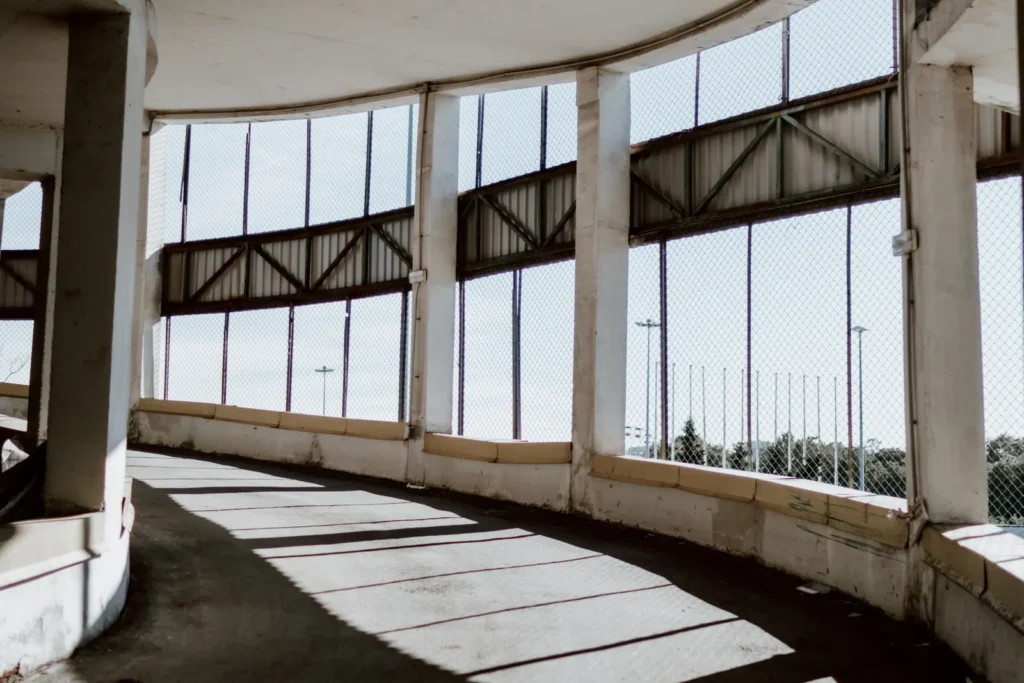
Have an old report, a DOB notice or a checklist from your last inspection? Send it before the visit and we will plan around it.
NYC Rules That Shape Your Garage Inspection
Two rules under 1 RCNY 103-13 decide what happens after the inspector leaves the garage.
Filing Deadlines After the Visit
The report must be filed within 60 days of the last inspection date, or a new assessment is needed. If DOB rejects the report, a revised one is due within 45 days, and an Unsafe finding must be reported to DOB and the owner right away.
Annual Observation Rules
In each year between full inspections, a QPSI or someone under a QPSI’s direct supervision completes the checklist from your accepted report. Keep it on site, file it with the next cycle’s report and report any hazard to DOB at once.
What Affects the Cost of a Garage Inspection
Every garage is priced on its own scope. These six factors move the price the most.
Size and Number of Levels
More floor area and more levels mean more ground for the inspector to cover.
Structure Type
Concrete, steel and precast garages are examined and tested in different ways.
Access and Operating Hours
Busy garages may need early, late or weekend visits to reach every space.
Records on Hand
Complete past reports and drawings shorten the work; missing records add research time.
Material Testing
Cores, chloride tests or rebar scans add lab and field time when they are needed.
Façade in Scope
The façade is included unless the building is in FISP or the garage is under half its floor area.
Why Owners Choose Us for Garage Inspections
Licensed QPSI Partners
Every assessment is performed and sealed by a DOB-approved Qualified Parking Structure Inspector.
One Team From Report to Repair
The crew that fixes the conditions works from the same report, so nothing is lost between steps.
Visits Planned Around Parking
Inspections are scheduled to keep spaces open and drivers moving.
Plain-English Reports
We walk you through every rating, deadline and next step in the report.
Parking Garage Inspection FAQs
How much of the garage does the inspector physically examine?
The QPSI must physically examine at least 10% of each structural element, such as beams, columns and slabs, on top of a visual survey of the whole structure.
What documents should we have ready before the inspection?
Past condition assessment reports, drawings, repair records, permits and any open DOB or ECB violations. These help the inspector compare conditions with the last cycle.
Does the garage have to close during the inspection?
Usually not. The inspector works level by level, and visits can be planned for quieter hours so most spaces stay in use.
What is included in the inspection report?
An overview with the Safe, SREM or Unsafe determination, a plan showing each significant condition, dated color photos, likely causes, repair timeframes, a maintenance plan and a blank annual observation checklist, all sealed by the QPSI.
What happens if the inspector finds an Unsafe condition?
The QPSI notifies DOB and the owner right away, and the owner must start protective measures and repairs immediately. Unsafe conditions must be corrected within 90 days of the report filing, unless DOB grants an extension.
Is the building façade part of the garage inspection?
Yes, unless the building is already covered by FISP or the parking structure takes up less than 50% of the building’s total floor area.
Can our building staff do the annual observation?
Only under the direct supervision of a QPSI. The observation must follow the checklist from your accepted report, and the completed checklists are filed with the next cycle’s report.
What happens if DOB rejects the inspection report?
A revised report must be filed within 45 days of the rejection. If DOB finds it administratively incomplete, the fix is due within 5 days.
Can the garage filing window match our FISP cycle?
Yes. An owner can move the parking structure filing window to line up with the next FISP window by notifying DOB at least 180 days before the assigned window ends.