
Parking Garage Waterproofing in NYC That Keeps Salt Out of the Slab
Every leak through a garage deck carries road salt into the concrete below it. We seal the deck surface, the joints and the cracks with coatings and seals chosen for how each level is used, so the concrete repairs you paid for stay repaired.
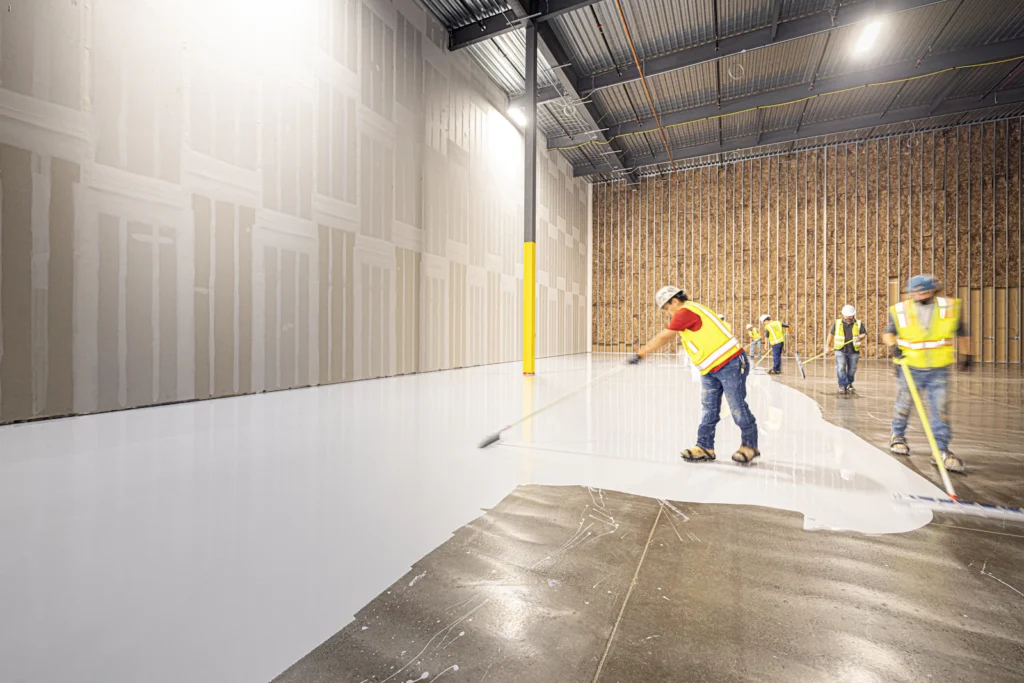
What Does Parking Garage Waterproofing Include?
Waterproofing a garage means closing every path that water and salt use to reach the slab. On a driven deck those paths are the surface itself, the cracks running through it, the joints between slabs and the cove where the floor meets a wall.
Most decks get a liquid traffic coating: an elastomeric membrane with sand broadcast into the top coat, so it seals the concrete and serves as the driving surface. Cracks are routed and sealed first, expansion joints get their own seal systems, and bare concrete that will not be coated can take a clear penetrating sealer.
Key Facts
Urethane coatings: often 72 hours before cars return
Fast-cure PMMA systems: open to traffic in about 1 hour
Moving cracks routed at least 1/4 by 1/4 inch before sealing
Waterproofing Work for NYC Parking Garages
Three kinds of work cover nearly every leak and coating item in a garage report.
Traffic Coating Installation
Primer, base membrane and a sand-filled top coat that seal the deck and take daily traffic.
Joint and Crack Sealing
Failed joint seals replaced, cracks routed and filled, and wall coves sealed.
Recoats and Coating Repairs
Worn top coats renewed and torn areas patched before water gets under the membrane.
Signs Your Garage Waterproofing Has Failed
Most owners notice the problem from the level below, not from the deck itself.
Drips Onto Parked Cars
Water falling from the ceiling after rain or snow melt, usually under a crack or joint.
Peeling or Blistered Coating
Membrane lifting off the deck, letting water run underneath it.
Bare Concrete in the Drive Lanes
Top coat worn away at entrances, ramps and turns, leaving grey concrete showing.
Torn or Missing Joint Seals
Seals that have split, sagged or pulled away from the joint edges.
Puddles That Sit for Days
Water that never reaches a drain and soaks into the slab instead.
Damp Lines Along Walls
Wet marks where the floor meets a wall or column, a sign the cove has opened.
Why Deck Coatings Wear Out Before Their Time
A coating rarely fails because of the product. It fails because of how and where it was put down.
Coating Laid on a Poor Surface
Coating rolled onto smooth, dirty or damp concrete never bonds. Makers call for a blasted profile and a dry surface test first.
One Thickness Everywhere
Drive aisles, ramps and sharp turns wear sooner than stalls, so they need a wear coat two or three times thicker.
No Plan for Upkeep
Small tears and thin top coats left alone let water under the membrane, and then whole areas peel.
Waterproofing Systems We Install
Each area gets the system that fits its traffic, its exposure and how long it can be closed.
Polyurethane Deck Membranes
Moisture-cured base and top coats with sand broadcast in, built to ASTM C957 for decks that are driven on.
Fast-Cure PMMA Coatings
Methyl methacrylate systems that cure in about an hour, for levels that can only close overnight.
Penetrating Silane Sealers
Clear sealers that soak about 1/5 inch into the concrete and repel water and chlorides without changing its look.
Expansion Joint Systems
Compression seals, strip seals or urethane T joints, matched to the width and movement of each joint.
Matching the System to Each Garage Level
A garage is not one surface. Each zone gets a build that fits what it faces every day.
Exposed Roof Deck
Sun, snow and plows on the top level call for a heavy duty membrane with a top coat made for direct sun.
Covered Parking Levels
Out of the weather but wet from salt tracked in on tires, often sealed or coated to the engineer’s choice.
Ramps and Tight Turns
Extra wear coat and more sand where tires brake, climb and turn.
Decks Over Occupied Space
Levels above shops, offices or homes need a crack-bridging membrane, since one leak reaches people.
Stair Towers and Walkways
Pedestrian grade coating with a slip resistant finish on landings and paths.
From Leak Survey to Open Deck
Trace Leaks From Below
We walk the level under each deck after rain, mark every drip and stain, and match it to a crack or joint above.
Blast and Test the Deck
Old coating and dirt come off by shotblasting to the profile the maker specifies, then the slab is tested for moisture.
Detail, Then Coat
Cracks, joints and coves are sealed first, then the base coat, the wear coat with sand and the top coat go down.
Cure, Stripe and Reopen
The coating cures for the time on the data sheet, lines are repainted and the level opens again.
Water dripping onto cars, or a QPSI report calling out your coating? Send photos or the report and we will scope the right system level by level.
NYC Rules That Touch Garage Waterproofing
Waterproofing is part of what a Local Law 126 assessment rates, and the products used must meet New York air quality rules.
Waterproofing Is Rated in Every Assessment
1 RCNY 103-13 requires the QPSI to assess the garage’s waterproofing systems and wearing surfaces, along with its structure.
The report must also note deteriorated joint material and the condition of joints and wearing surfaces, so a failing coating can show up as a listed item.
Coatings Must Meet State VOC Limits
New York’s Part 205 rule caps the solvent (VOC) content of coatings sold or applied in the state. Since 2021, waterproofing membranes are held to 250 grams per liter and reactive penetrating sealers, the silane type, to 350.
We use compliant products and keep their data sheets in your job file.
Based on 1 RCNY 103-13 and 6 NYCRR 205.3.
How Waterproofing Jobs Are Priced
Coatings are priced by the square foot, then adjusted for these six factors.
Deck Area by Zone
Square feet of each zone, since roof decks and ramps take heavier builds.
Old Coating Removal
Taking off a failed membrane adds blasting time and disposal.
Crack and Joint Footage
Linear feet of routed cracks and new joint seals.
System Type
Fast-cure PMMA costs more per foot than urethane but shortens closures.
Bays Closed at a Time
Working a few bays at once keeps parking open but adds setups.
Season and Temperature
Standard urethanes need a substrate of at least 40°F, so cold months may call for other systems.
Why Our Coatings Stay Bonded
Leaks Traced Before Quoting
We find where the water enters before we price, so the fix goes where the leak is.
Prep Done to the Maker's Spec
Profile and moisture are checked before any coating goes down.
Heavier Builds Where Tires Turn
Ramps and turns get the extra wear coat they need, not the stall build.
An Upkeep Plan at Handover
You get a simple check schedule, so small tears are fixed while they are small.
Garage Deck Coating and Waterproofing FAQs
How long does a parking deck coating last?
On a busy deck, plan on renewing the top coat about every five years. A low traffic deck that was installed well can go six to ten years. With top coat renewals on time, the base membrane underneath can last much longer.
Can a new coating go over the old one?
Sometimes. If the old membrane is still bonded, a recoat can be as simple as cleaning, priming and a new top coat. If it is peeling or holding water underneath, it has to come off first.
Does a traffic coating cover up cracks?
Not on its own. Hairline cracks that do not move get a stripe of base coat first. Moving cracks wider than about 1/16 inch are routed and filled with sealant before the deck is coated.
Does every garage level need a coating?
No. Exposed roof decks and levels over occupied space usually need a full membrane. Some covered levels only need a penetrating sealer. The choice depends on exposure, cracking and what sits below.
How soon can cars park on a new coating?
It depends on the system. Many urethane coatings need about 72 hours before cars drive on them. Fast-cure PMMA systems can open in about an hour after the last coat.
Why does the coating wear through on ramps first?
Tires brake, climb and turn there, which grinds the sand out of the top coat. That is why ramps and turns get a thicker wear coat than parking stalls.
Why is water still dripping after the deck was coated?
The leak is usually at a detail, not in the open deck: a joint seal, a wall cove, a drain or a pipe through the slab. We trace drips from the level below to find the exact spot.
How often should a deck coating be checked?
Walk the deck about once a month for wear and damage, and do a full check twice a year that includes joints, drains and high wear areas.
Will a new coating help at the next Local Law 126 inspection?
The QPSI assesses waterproofing and wearing surfaces in every report, so a sound, well kept system answers those items. The rating itself is always the inspector’s call.